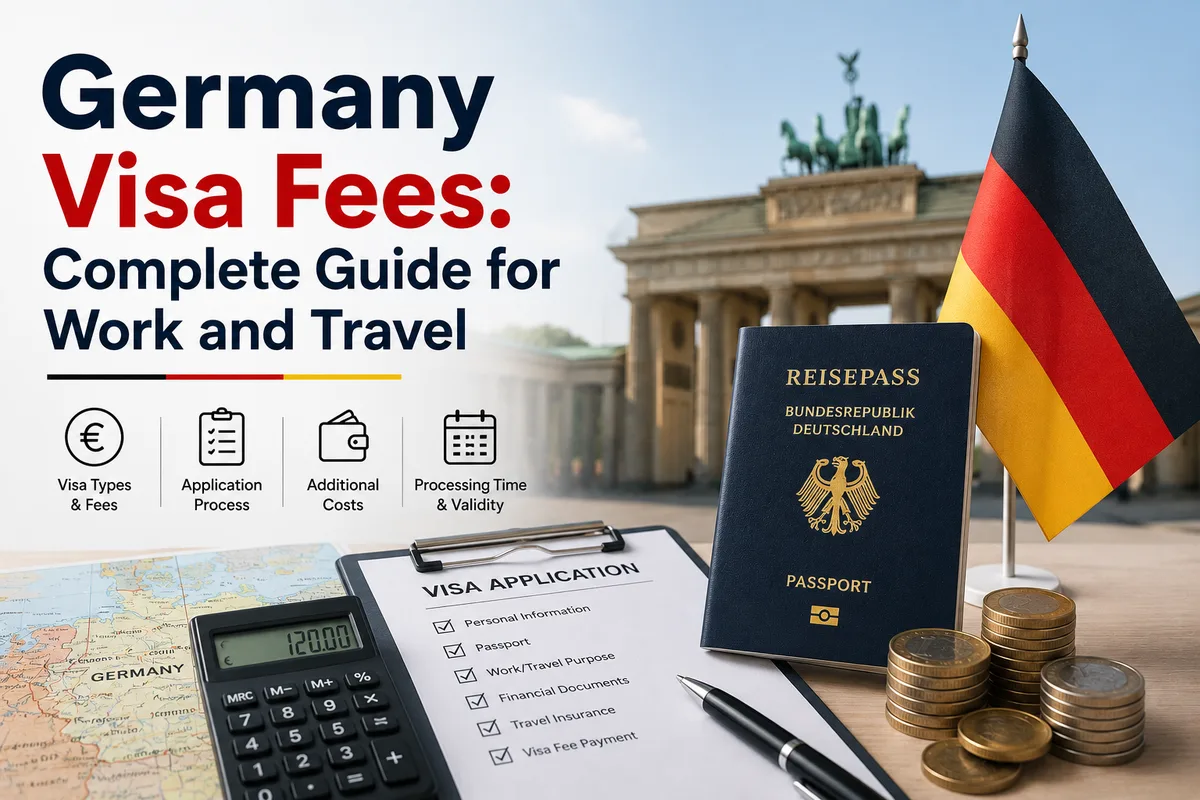
Schengen and National D-visas, and specific fees for applicants from India. Plan your budget effectively with our comprehensive guide. Whether you are a highly skilled professional dreaming of a lucrative career in Frankfurt, a student bound for a prestigious university in Munich, or a tourist eager to explore the historic streets of Berlin, your journey to Germany begins with a single administrative step: the visa application. While gathering your documents and planning your itinerary can be exciting, budgeting for the official costs is an entirely practical necessity. Understanding the complete breakdown of germany visa fees helps you avoid last-minute surprises, ensuring a smooth transition into Europe’s largest economy. In this comprehensive guide, we will explore everything you need to know about German visa expenses, from standard application charges to post-arrival permit fees, with actionable advice to keep your relocation budget firmly on track.
1.The Fundamentals: Type C vs Type D Visa Costs
Before diving into specific price tags, it is essential to understand that German visas are categorised by the length and purpose of your stay. The Type C vs Type D visa costs differ significantly because they serve entirely different purposes.
- Type C (Schengen Visa): Designed for short stays of up to 90 days within a 180-day period. This is ideal for tourism, visiting family, or attending short business conferences.
- Type D (National Visa): Designed for long-term stays exceeding 90 days. You will need this visa if you intend to work, study, or permanently join family members in Germany.
Short-Stay Travel: Schengen Visa Application Cost
If your goal is a quick holiday or a brief business trip, you will be applying for a Type C visa. Following a recent update in mid-2024, the standard Schengen visa application cost for adults is €90 (approximately £75 or ₹8,100, depending on fluctuating exchange rates). Families travelling together will be pleased to know there are reduced visa rates for children. The fee for children aged between 6 and 12 years is €45. Furthermore, infants and children under the age of 6 are entirely exempt from the visa fee, making family holidays slightly more budget-friendly.
Long-Term Relocation: National D-Visa Price Germany
For those looking to build a life in Germany, the Type D visa is your golden ticket. Surprisingly, the standard National D-visa price Germany currently stands at €75 for adults—which is marginally cheaper than the short-stay Schengen visa. If you are moving to Germany and bringing your spouse and children along, you will need to factor in the Family reunification visa price. The cost remains €75 for your adult spouse and €37.50 for any accompanying minors under the age of 18.
2.Relocating for Employment: The Germany Work Visa
Germany is facing a massive skills shortage, making it a prime destination for international talent. Applying for a germany work visa is a multi-step process that requires careful financial planning. To successfully obtain a germany work permit, you must first meet the strict germany work visa requirements. These generally include holding a recognised university degree or vocational qualification, securing a binding job offer from a German employer, and providing proof of sufficient financial resources or an adequate starting salary. Once your requirements are met, you will pay the standard €75 fee at your local embassy or consulate to enter the country. However, highly qualified professionals often apply for the EU Blue Card. When budgeting for the Blue Card Germany application expenses, remember that the €75 is just for your initial entry clearance. Once you arrive in Germany, you must convert this entry visa into a formal residence permit, which incurs additional local fees (detailed further down).
Special Focus: India to Germany
Germany has become incredibly popular among Indian professionals, particularly in the IT, engineering, and healthcare sectors. If you are applying from the subcontinent, understanding the visa cost for germany from india in local currency is vital. The standard germany visa fees from india for a Type D long-term visa translate to roughly ₹6,800, subject to the embassy’s current exchange rate. For a successful germany work visa for indian citizens, applicants must process their paperwork through VFS Global, the official partner of the German diplomatic missions in India. Actionable Tip: Always check the current exchange rate on the official German Missions in India website a day before your appointment, as the rupee amount fluctuates and you must pay the exact converted amount.
4.Post-Arrival Expenses: German Residence Permits
Your financial obligations do not end once you pass through German border control. Within your first 90 days of arriving on a National D-Visa, you must register your address (Anmeldung) and apply for your physical residence permit (Aufenthaltstitel) at the local Foreigners' Registration Office (Ausländerbehörde). The Cost of German work permit issuance locally generally ranges between €100 and €113. These Administrative fees for residence permits cover the processing and printing of your biometric residence card. Years down the line, you will also need to consider the Cost of extending German visa limits. Extending a temporary residence permit typically costs between €93 and €100, depending on your specific visa category and the local municipality's fee structure.
5.Good News: Visa Fee Exemptions
Not everyone is required to pay the standard processing fees. The German government actively encourages cultural exchange, scientific research, and academic excellence through various financial waivers. Visa fee exemptions for students are quite common. For instance, if your stay is funded by a German public institution, such as the DAAD (German Academic Exchange Service), your visa fee is completely waived. Additionally, researchers travelling for specific scientific projects, and spouses of EU/EEA citizens exercising their right to free movement, are generally exempt from standard application fees. If you believe you qualify for a fee waiver, you must bring undeniable documentary evidence—such as your official scholarship award letter—to your visa appointment.
6.Payment Logistics: How and Where to Pay
Understanding the exact Payment methods at German consulate locations can save you from a stressful, last-minute panic. The payment rules vary dramatically depending on the country you are applying from. So, How to pay German embassy fees correctly?
- In the UK: Fees at VFS Global centres in London, Edinburgh, or Manchester are typically paid online during the appointment booking process, or via debit/credit card at the centre.
- In India: Payment methods are notoriously strict. Often, you are required to pay via an exact Demand Draft (DD) drawn in favour of the specific consulate (e.g., "Consulate General of the Federal Republic of Germany, Mumbai"). Some VFS centres now accept UPI or card payments for their service charges, but the core visa fee might still require a Demand Draft.
- Other Regions: Many consulates only accept cash in the local currency or exact change. Always consult the appointment confirmation email provided by the consulate or VFS Global, as this will state the mandatory payment method for your specific jurisdiction.
7.Cancellations: Are German Visa Fees Refundable?
A question frequently asked by anxious applicants is: Are German visa fees refundable if the application is rejected? Unfortunately, the answer is a firm no. The fee you pay is fundamentally an administrative processing charge. It covers the time and resources the embassy staff use to review your documentation, verify your background, and make a legal decision. Therefore, German visa refund eligibility is virtually non-existent in cases of visa refusal or applicant withdrawal. The only exceptionally rare scenario where a refund might be issued is if the consulate themselves made a gross administrative error, or if you accidentally double-paid the fee through a portal glitch. To avoid wasting your hard-earned money, ensure your application is flawless, your documents are perfectly translated (if required), and your cover letter clearly explains your intentions before handing over any payment.
8.Final Thoughts
Navigating the bureaucracy of a foreign country can feel overwhelming, but mapping out your germany visa fees shouldn't be a source of anxiety. By understanding the distinction between short-term Schengen charges and long-term National visa costs, you can budget effectively for your European endeavour. Remember to account for the hidden extras—such as VFS service charges, mandatory health insurance, and post-arrival administrative fees—to ensure a stress-free transition. Whether you are funding your own blue-collar germany work permit or securing a fully funded student visa with fee exemptions, meticulous financial planning is your best tool for success. Gather your documents carefully, double-check your local consulate’s preferred payment methods, and take that exciting first step towards your new life in Germany!