
Deciding to pursue a business degree in the United Kingdom is a brilliant move for your career. British universities are globally renowned for their rigorous academic standards, diverse networking opportunities, and strong links to global industries. However, if you are planning to study MBA UK programmes, mapping out your finances is undoubtedly the most critical step in your preparation.
For many aspiring leaders, understanding the exact UK MBA fees for Indian students can feel like navigating a maze. Between tuition, accommodation, visas, and living expenses, the numbers add up quickly. This comprehensive guide will break down every aspect of your financial commitment, offering actionable advice on how to budget, save, and secure funding for your British education.
1.The Core Investment: Tuition Fees Explained
The largest chunk of your budget will inevitably go towards your university tuition. The overall MBA in UK cost varies significantly based on the institution's ranking, location, and the specific format of the course you choose.
Course Formats and Duration
One of the greatest financial advantages of the British education system is the duration of its postgraduate degrees. A direct comparison of one year MBA tuition vs two year programmes (typically found in North America) reveals that the UK model effectively halves your tuition and living costs whilst allowing you to re-enter the workforce a year earlier.
Furthermore, you must consider the type of programme you are applying for. The difference between executive MBA and full-time MBA tuition fees is substantial. Full-time MBAs are designed for professionals with 3–5 years of experience, whereas Executive MBAs (EMBAs) target senior leaders and often carry a premium price tag, though they are frequently sponsored by employers.
University Tiers: What to Expect
When analysing the MBA in UK for Indian students fees, institutions generally fall into three pricing tiers:
- Top-Tier (Russell Group & Elite Business Schools): Schools like London Business School (LBS), Oxford (Saïd), and Cambridge (Judge) command premium fees, often ranging from £50,000 to £115,000.
- Mid-Tier Universities: Excellent universities such as Warwick, Cranfield, and Edinburgh typically charge between £25,000 and £45,000.
- Budget-Friendly Options: There are numerous highly respected institutions where tuition ranges from £12,000 to £20,000.
London vs. Regional Business Schools
Location plays a massive role in your tuition. Naturally, MBA in London fees sit at the higher end of the spectrum due to the capital's status as a global financial hub. The MBA in London cost reflects the proximity to top-tier networking and corporate headquarters. However, if you have your heart set on the capital but are working within a strict budget, there are excellent alternatives. You can explore the top affordable universities in London for management, such as the University of East London or Roehampton University, which offer fantastic value without sacrificing the London experience.
2.Accommodation and Daily Life
Once tuition is sorted, your next priority is accommodation and sustenance. The cost of living in UK for international students fluctuates drastically depending on your postcode.
Comparing living expenses in London vs regional UK cities highlights a stark contrast. In London, you should budget approximately £1,300 to £1,600 per month to cover rent, transport, utilities, and groceries. Conversely, cities like Manchester, Birmingham, Leeds, or Glasgow are far more forgiving. In these regional hubs, a comfortable monthly budget ranges from £900 to £1,200.
Typical Monthly Living Expenses (Regional vs London):
- Accommodation: £500–£800 (Regional) vs £800–£1,200+ (London)
- Groceries: £150–£200
- Transport: £50–£80 (Regional) vs £150+ (London Zones 1-3)
- Utilities & Internet: £80–£120
- Socialising & Leisure: £100–£200
Actionable Tip: To save money, opt for university-managed halls of residence or share a flat with other postgraduate students. Cooking at home and using student discount cards (like TOTUM) for travel and shopping will further stretch your pounds.
3.Beyond the Classroom: Extra Expenses
Many students meticulously calculate tuition and rent but are blindsided by the hidden costs of studying abroad in United Kingdom.
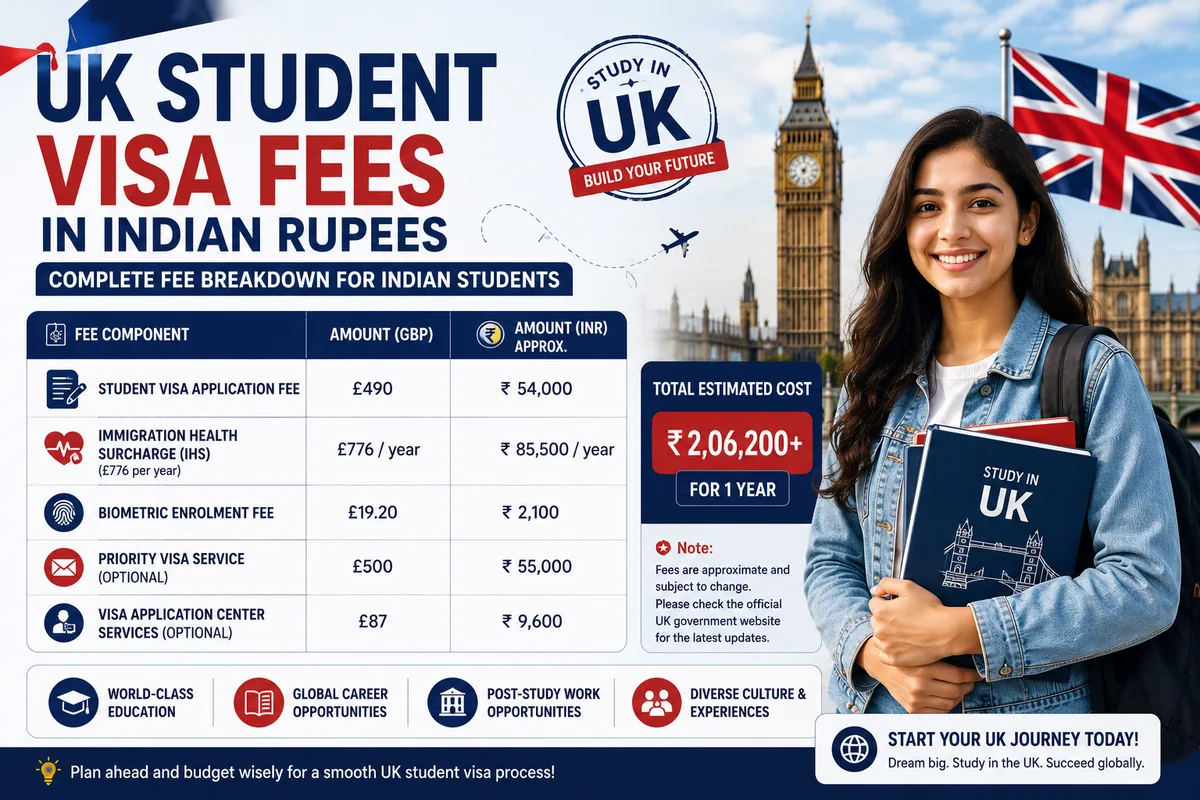
Before you even book your flight, you must navigate the student visa application process and health surcharge costs. For Indian students applying for a Student Route visa (formerly Tier 4), the application fee is £490. More significantly, you must pay the Immigration Health Surcharge (IHS), which currently stands at £776 per year. This surcharge is mandatory but grants you full access to the UK’s National Health Service (NHS) during your stay.
Other hidden costs to budget for include:
- Flights to and from India: £600–£900 (return)
- Course Materials & Books: £300–£500
- Winter Wardrobe: £200–£300 (a sturdy waterproof coat is essential!)
- Networking Events & Field Trips: £200–£400
4.Admissions Without the GMAT Hurdle
Standardised testing can be a costly and time-consuming barrier. Preparation courses, study materials, and the exam fee itself add up to a tidy sum. Fortunately, British universities take a holistic approach to admissions.
There is a growing list of reputable business schools in UK accepting Indian students without GMAT scores. Institutions like Lancaster University, University of Reading (Henley), and Durham University often waive the GMAT requirement if you can demonstrate robust professional experience, strong leadership potential, and excellent academic records. This not only saves you money but accelerates your application timeline.
5.Funding Your MBA: Scholarships and Loans
You do not have to shoulder the financial burden entirely on your own. With proper planning, you can significantly reduce your out-of-pocket expenses.
Scholarships to Watch For
There is a vast array of MBA scholarships UK institutions offer specifically to attract global talent. The most coveted of these are fully funded scholarships for Indian MBA applicants. These awards cover full tuition and sometimes provide a living stipend. You should also look into external government funding. For instance, reviewing the Chevening scholarship eligibility for Indian candidates is a brilliant starting point. Chevening is a fully-funded UK government scheme, though it requires you to have at least two years of work experience and mandates that you return to India for two years after completing your degree. Additionally, the GREAT Scholarships and the Commonwealth Scholarship programmes are excellent avenues for high-achieving Indian applicants.
Education Loans
If scholarships do not cover the full amount, borrowing is a practical next step. Historically, securing a loan required pledging significant assets. Today, securing an education loan for abroad studies without collateral is much more accessible. Non-Banking Financial Companies (NBFCs) and certain private banks in India offer unsecured loans up to ₹40–₹50 Lakhs based on your academic profile, the ranking of the UK university, and your future employability.
6.Working While Studying and Post-Graduation ROI
A major advantage of studying in Britain is the ability to earn whilst you learn, followed by the opportunity to launch your international career upon graduation.
Earning During Your Degree
To help manage your daily expenses, you can take on part-time work. However, you must strictly adhere to the part-time work regulations for Tier 4 visa holders (now the Student Route visa). As a postgraduate student on a full-time degree, you are legally permitted to work up to 20 hours per week during term time and full-time during official university holidays. Typical part-time roles in retail, hospitality, or campus administration pay between £10.42 and £12.00 per hour.
Post-Graduation Return on Investment (ROI)
The true value of your degree becomes apparent when you enter the job market. The post-study work visa impact on career ROI has been transformative for Indian students. The UK's Graduate Route visa allows you to stay and work (or look for work) in the UK for two years after successfully completing your MBA. This provides a crucial window to secure a sponsored role and gain invaluable international corporate experience.
When looking at the numbers, the average salary after MBA in UK for Indian graduates typically ranges from £45,000 to £75,000 per annum, depending on the sector, location, and your previous work experience. Roles in consulting, finance, and tech management in London often push well past the £80,000 mark, making the initial financial outlay highly worthwhile.
7.The Bottom Line: Total Estimated Budget
To put everything into perspective, let's summarise the financial commitment. Calculating the total expenditure for Master of Business Administration in UK in INR helps you visualize the goal. For a standard one-year MBA at a mid-tier regional university:
- Tuition: ₹25,000,000 – ₹35,00,000 (£25,000 – £35,000)
- Living Costs (12 months): ₹12,00,000 – ₹15,00,000 (£12,000 – £15,000)
- Visa, IHS & Flights: ₹2,00,000 – ₹2,50,000 (£2,000 – £2,500)
- Total Estimated Budget: ₹39,00,000 to ₹52,50,000
Note: If you opt for an elite London-based business school, this total can easily exceed ₹80,00,000 to ₹1 Crore. Conversely, choosing a budget-friendly university can bring the total down to around ₹28,00,000.
Why Choose Cokonet Overseas?
- Personalized MBA counselling
- University shortlisting based on your profile and budget
- Scholarship and education loan assistance
- Complete UK student visa support
- SOP and application guidance
- Accommodation and pre-departure assistance
- End-to-end support until you reach the UK
Book Your FREE MBA Counselling Session Today!
Get expert guidance on:
- Choosing the best UK MBA universities
- Estimating your total study budget
- Finding scholarships and financial aid
- Student visa documentation
- Planning your career after graduation
Learn More:https://cokonetoverseas.com/destinations/uk
Website: https://cokonetoverseas.com/
8.Final Takeaway
Navigating the UK MBA fees for Indian students requires thorough research and early preparation. While the initial numbers may seem daunting, the combination of shorter course durations, access to unsecured loans, generous scholarships, and exceptional post-study work opportunities makes it a deeply rewarding investment.
Start by identifying universities that align with both your career ambitions and your budget. Apply for funding early, understand your visa costs, and you will be well on your way to transforming your career trajectory in one of the world's most dynamic business landscapes